SocialHub
Two years leading design at the SaaS behind Germany’s biggest brands.
When Deutsche Bahn or Hamburg Airport answers the public, someone is working through an inbox. For two years, that inbox was my job.
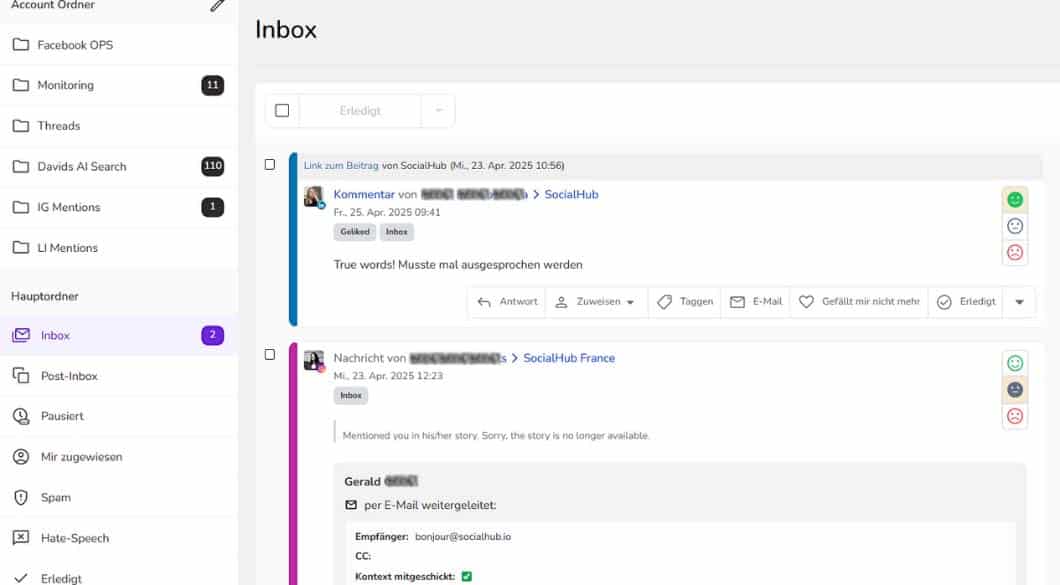
Inbox triage and public replies
As SocialHub grew, more of the work converged in the inbox: triage, approvals, channels, languages and teams. I made that complexity easier to move through without losing context.
My job was to make those workflows easier to trust. Less sorting things out before you could do the actual work.
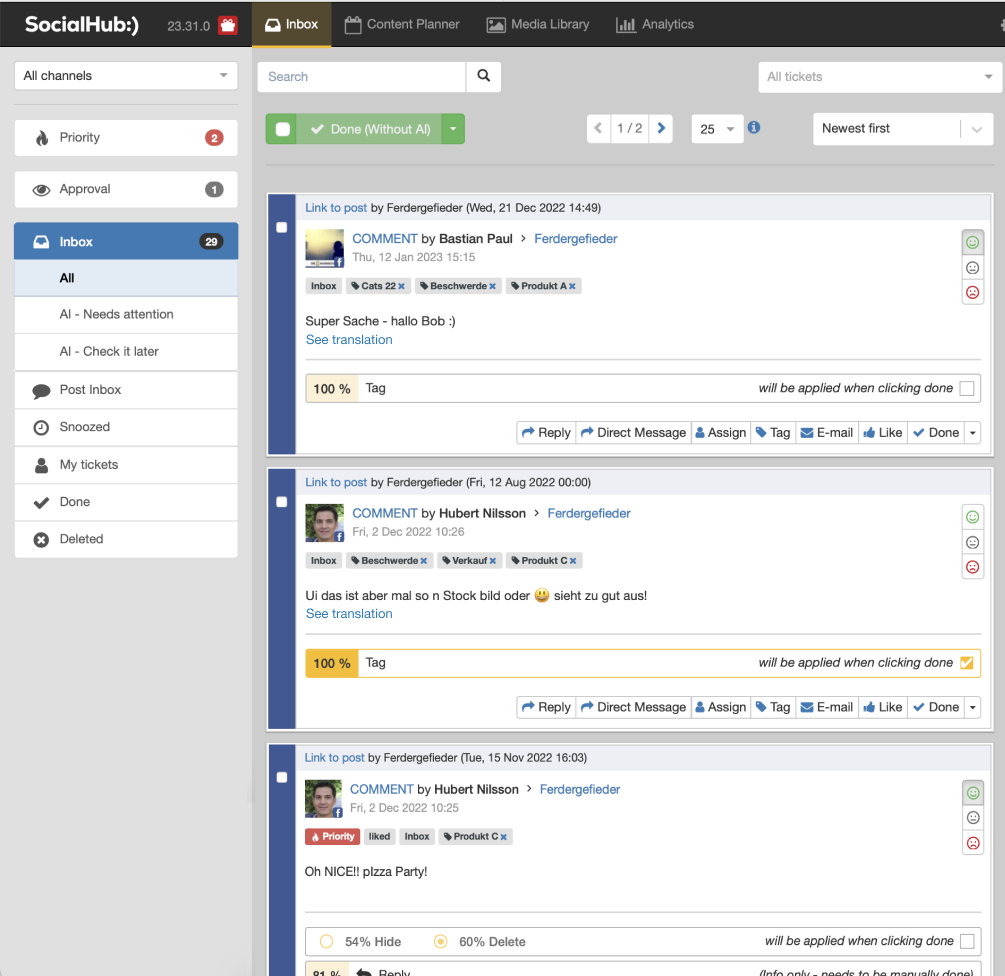
Web + two native apps
I led product design across the responsive web platform and two native apps, with one goal: make three surfaces behave like one product. That meant designing the interactions, shared UI library, multilingual UX writing and accessibility as parts of the same product.
I also worked closely with product and engineering before solutions hardened. The system had to survive implementation, not just look coherent in Figma.
- UI libraryOne shared library across web and both apps. New features started from the system, not a blank frame.
- UX writingProduct copy in three languages. Labels, states, and errors designed, not translated after the fact.
- AccessibilityWCAG compliance was part of the work from the start.
- MentoringReviews, pairing, and honest feedback in both directions.
Four features that removed work
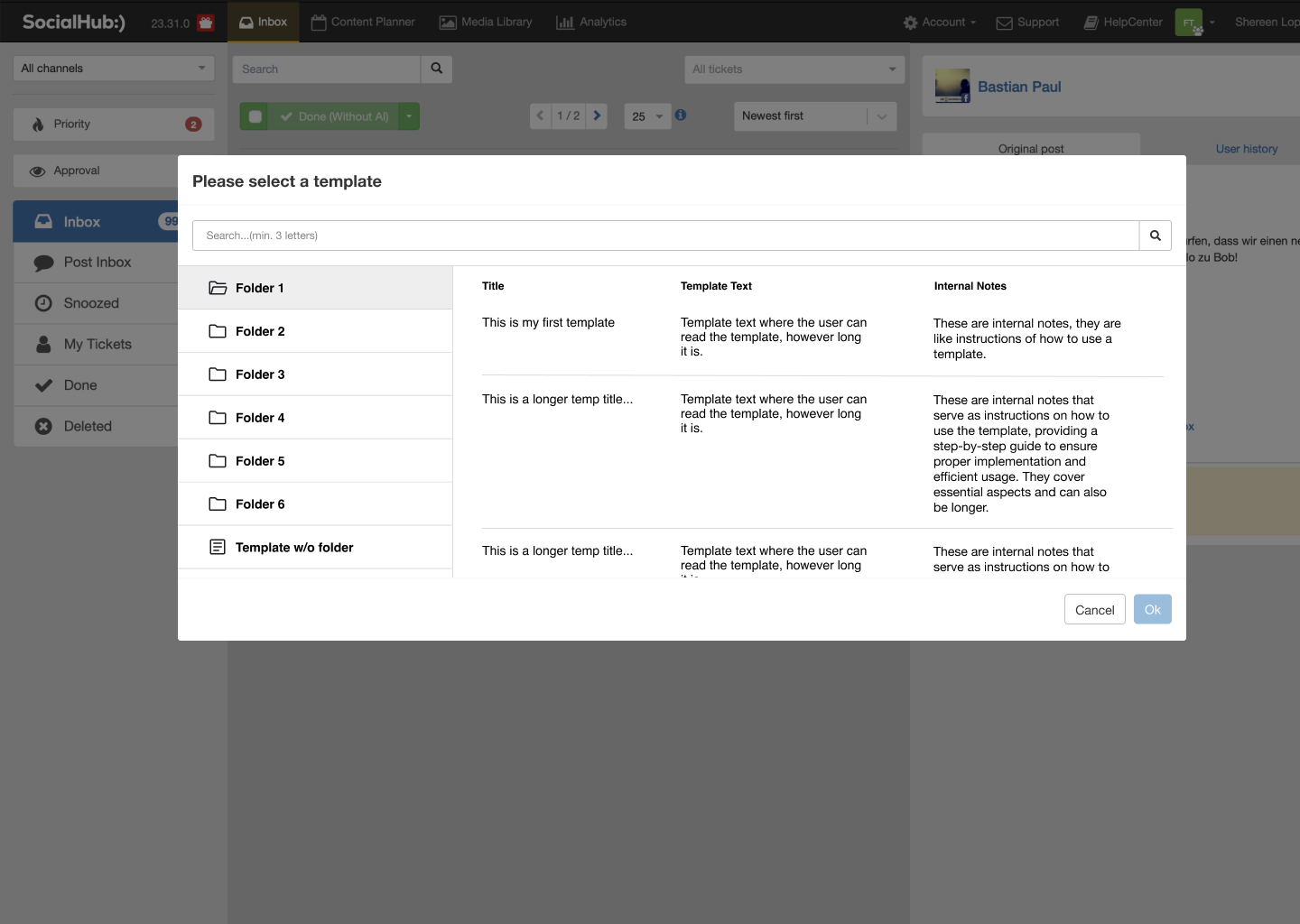
The solutions were deliberately practical: smarter folders, clearer approval states, translation inside the conversation and tools that kept people inside the workflow instead of sending them somewhere else. Each removed a piece of unnecessary work around the work users had actually come to do.
Customers struggle with the absence of folder functionality for organizing templates.
The current chronological display of templates is impractical for those needing them organized by topic or frequency of use.
Difficulty in navigating a large number of templates due to high ticket volume and multiple countries, leading to decreased efficiency and increased error rates.
Customer pain synthesis · Templates Folders — Inboxold working file
Design + engineering
Engineering shaped the design early, while the work was still cheap to change. We agreed on constraints while the work was still cheap to change, so I could design around what the product could genuinely support.
I also used AI-assisted prototyping to get working ideas into conversations earlier. The tool made the loop faster; the decisions still came from understanding the workflow, its edge cases and what had to hold together in production.
Engineering was involved early, constraints were clear, and systems were built extensibly without breaking consistency.
Mentoring the design team
I mentored designers through real product work: reviews, pairing, direct feedback and room to disagree. I never wanted quality to depend on one person being in every meeting or touching every file.
Good mentoring creates more people who can spot when something does not make sense, make a good decision and carry the system forward themselves.
She inspired us through her example: open to feedback, eager to learn, and full of integrity.
+30%retention within six months
–32%delivery time via AI-assisted prototyping
800+customer reviews
WCAGaccessibility shipped as standard
- OMR Top Tool 2023
- OMR Usability Excellence 2024
- OMR Leader Social Media Management 2025
- OMR Top 100 Tools 2025
Shereen can step into any team, be given any problem, and she’ll find a way to make it work.
- The systems that survive are the ones engineering helped shape before the first pixel.
- Consistency is an early decision. Retrofitting it costs ten times more.
- AI made prototyping faster. The thinking still happened the slow way.
- Mentoring gave more people the confidence to carry the work forward.